











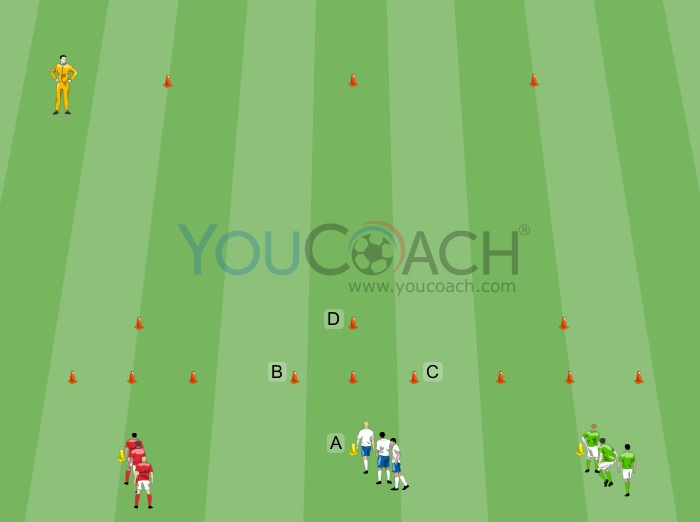


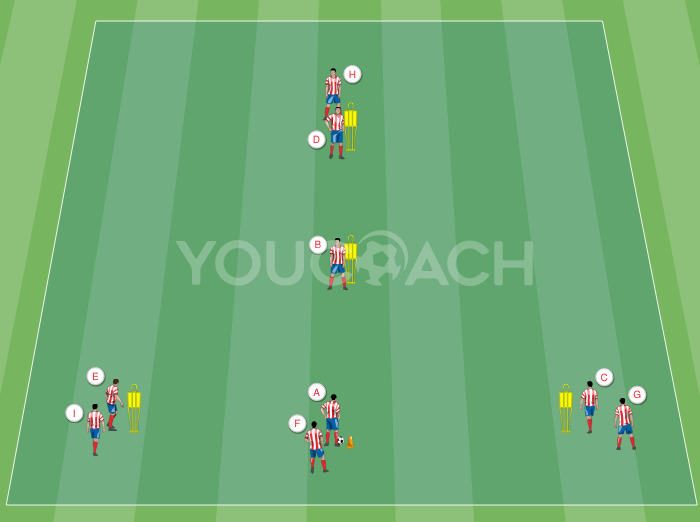
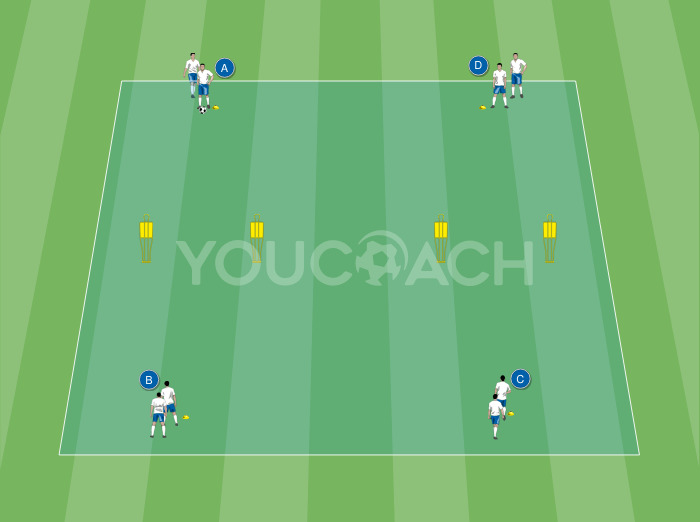
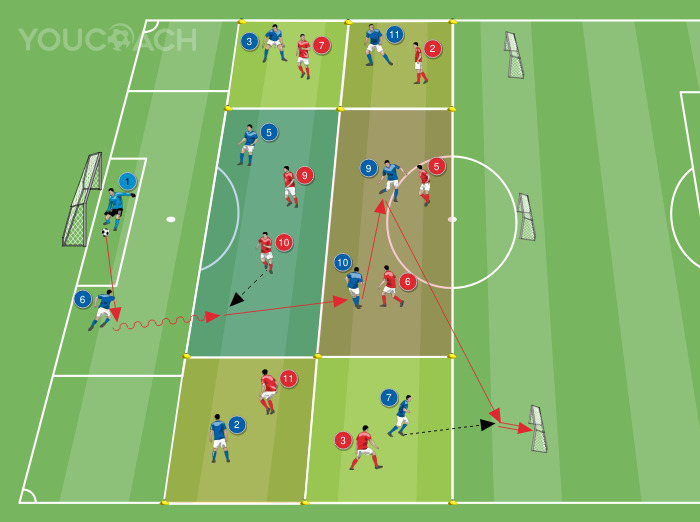




U13-U12 Complete Season Plan - User guide
Start planning your season in just a few clicks! Here's how to get the most out of your YouCoach Complete Season Plan.
Introduction
A Season Plan for a specific category: discover the annual training program created by the YouCoach staff
YouCoach introduces the "Complete Season Plans," a specific and versatile annual training program for different categories, designed to guide coaches through a carefully planned path, session after session, covering the full 360° development of players' technical, tactical, physical, coordination, and social-emotional skills.
Within each program, coaches will find up to 500 drills for their category: a wide pool of options that, spanning different training methods, keeps scheduled sessions consistently varied and engaging, aiming for continuous player involvement.
The main goal is to offer staff a complete yet flexible and adaptable tool, helping coaches establish a shared methodological approach to maintain throughout the year, one that every coach can adapt to their own philosophy, habits, skills, and ideas.
At the foundation of this technical project are precise methodological principles and choices that guided the YouCoach staff in designing this complex program, then adapted into different goals and content based on the needs of different age groups.
Download the PDF manual with instructions
Methodology
The methodological core shared across all age groups is building a team with the will to dominate play through possession of the ball; applied to the specific needs of each category, this translates into greater attention to individual technical and tactical aspects in the grassroots stages (passing intensity, oriented control, combining technical skills), moving toward greater focus on collaborative play (2-3 player combinations), up to a higher volume of work on collective play for the older categories (among others, build-up play, ball circulation, possession management). In fact, the possession phase is always present in every training session and notably stands out in the total annual minutes dedicated to it compared to the minutes dedicated to the non-possession phase. The underlying principle of building a positive, proactive team is further expressed through other sub-principles, such as building from the back to manage and control play, or the ability to play between the lines of pressure. Alongside these methodological pillars are:
- the importance placed on verticality of play and gaining depth, applied in practice through the choice of tools such as conditioned games and positional games (used to develop the ability to gain depth through effective use of space);
- the intensity of work, always prioritized over volume of work: for this very reason, the time dedicated to each training phase never exceeds 15-20 minutes, reflecting greater attention to quality of work rather than execution time.
Another notable methodological choice concerns the random scheduling of training tools used throughout the season to put the proposed principles of play into practice. The program is not driven by technical or tactical objectives as such, but rather by specific principles for each category and the amount of work needed to develop those principles; the choice of tools and individual drills came only afterward, randomly distributing the tools to be used over the course of the season. The methodological choice to train the same principle using multiple different tools is therefore entirely intentional and a cornerstone of the annual programs for all categories.
Regarding the performance area, the key points of the chosen methodology can be summarized as gradual load progression considering the different moments of the season (pre-season preparation, in-season, winter break, in-season), overall approach (which favors, especially in youth development, ball-based work over work without the ball), adapting content to the specific needs of each age group, and a game-oriented approach over work without the ball through the most varied and engaging proposals possible.
In every season, the YouCoach staff has also paid particular attention to individual injury prevention, reflected not only in the selection of drills but especially in the methodological choice to dedicate two specific phases of each training session to this aspect (resulting in a significant number of annual minutes dedicated to players' movement, coordination, and physical-athletic development).
Below we summarize the key principles of play underlying the annual programs.
Program Structure
Complete, category-specific, customizable: here's how YouCoach's new Season Plans are organized
Each Season Plan is a collection of hundreds of training sessions and drills, carefully selected to follow a path covering the entire sports season.
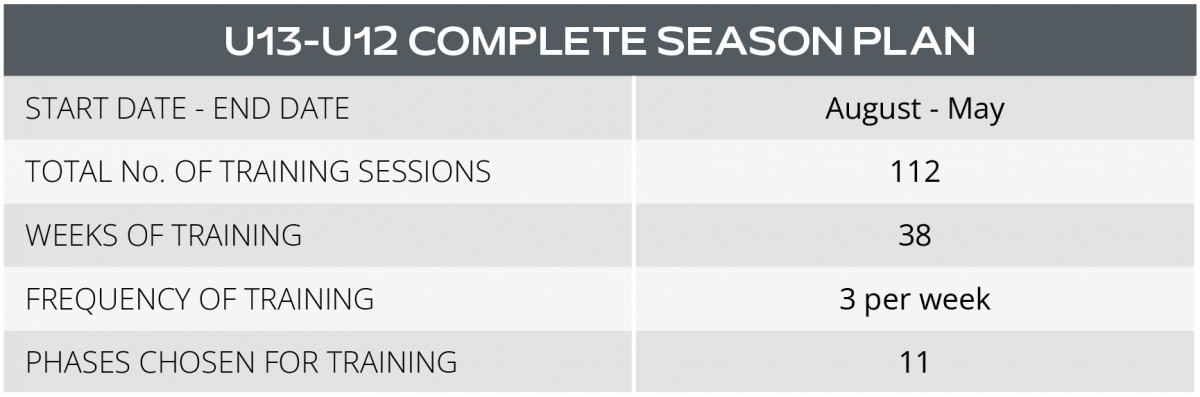
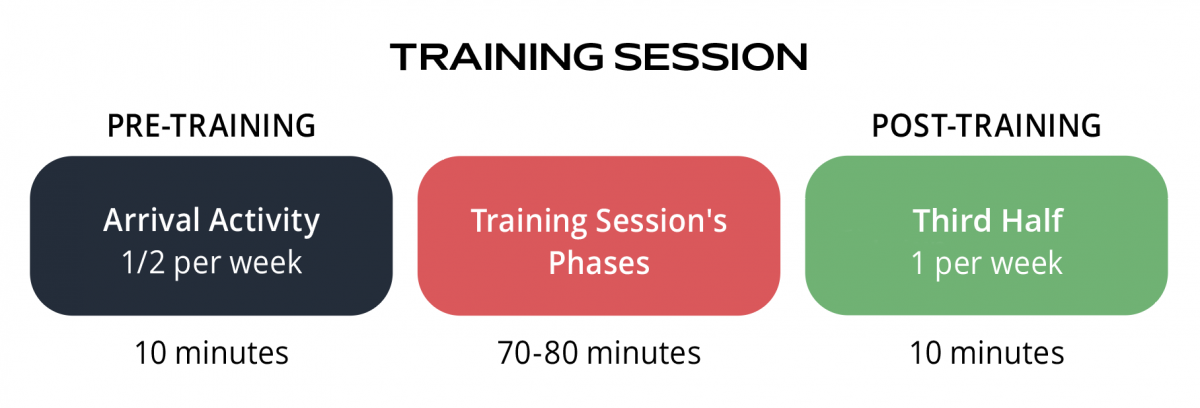
The pre-training activity in grassroots activity (called Arrival Activity) is scheduled once or twice a week and includes fun/recreational activities or self-directed cooperative activities, through which children can experience self-management and responsible handling of their own space, time, and equipment. In the competitive sector, the Prevention phase includes dry-land activities for the whole team, present every week, covering neuromuscular work, joint mobility, and core stability.
The central phases were chosen to put the previously mentioned principles into daily training practice: they are summarized below for grassroots activity and competitive activity respectively. From session to session, they are used in whole or in part, and vary throughout the season depending on the day of the week, the specific session, and the period.
Training Session's Phases of the Season:
- Pre-Practice
- Performance
- Game Intelligence
- Body Shape & Scanning
- Duels
- Defensive Skills
- Attacking Depth
- Finishing
- Scrimmage
- Set Pieces
- Cool-down & Debrief
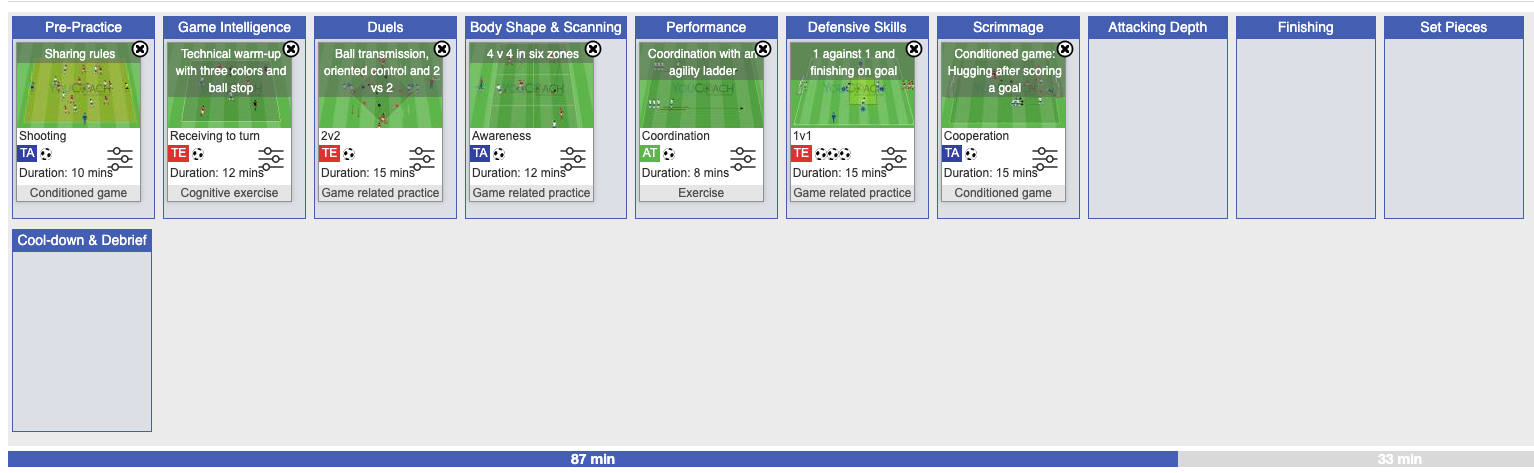
The game intelligence phase focuses on technical/tactical/cognitive activation, primarily with the ball, expressing the importance of building the foundations needed to master ball possession with the right technical and coordination skills. Not surprisingly, this phase uses a wider variety of tools in grassroots activity compared to adult categories, reflecting the greater need to multiply stimuli and broaden children's technical and motor experiences compared to adults.
The collective and unit tactical principles proposed starting from the U13 age group are based on the 4-3-3 system: this is not a random choice, but is justified by the fact that, given the principles outlined above, this system appears to be the most compatible, versatile, and adaptable. Each coach is therefore free to choose, modify, and adapt drills according to their preferred system of play.
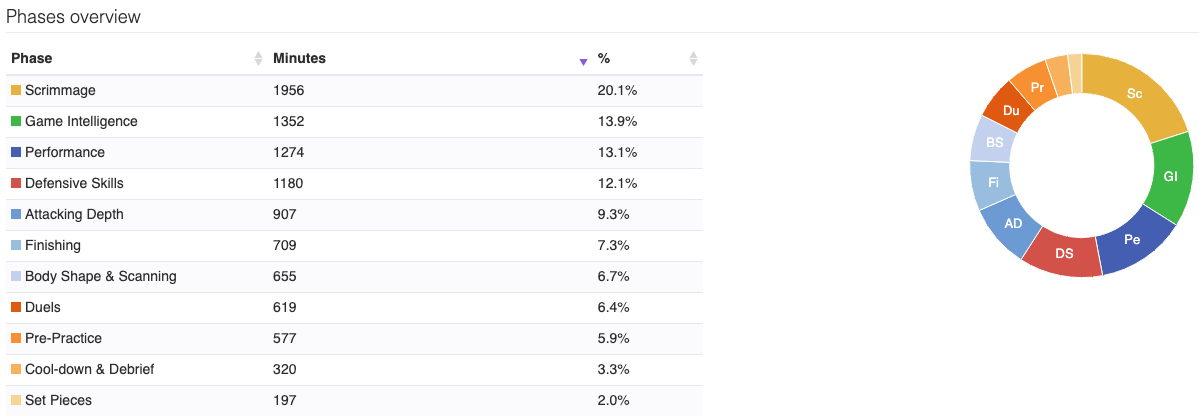
As for the game phase, in all age groups both thematic/conditioned games and free play alternate over the course of the week; however, in grassroots activity, the minutes dedicated to free play are nearly double those dedicated to conditioned games, while this ratio is reversed in the competitive categories.
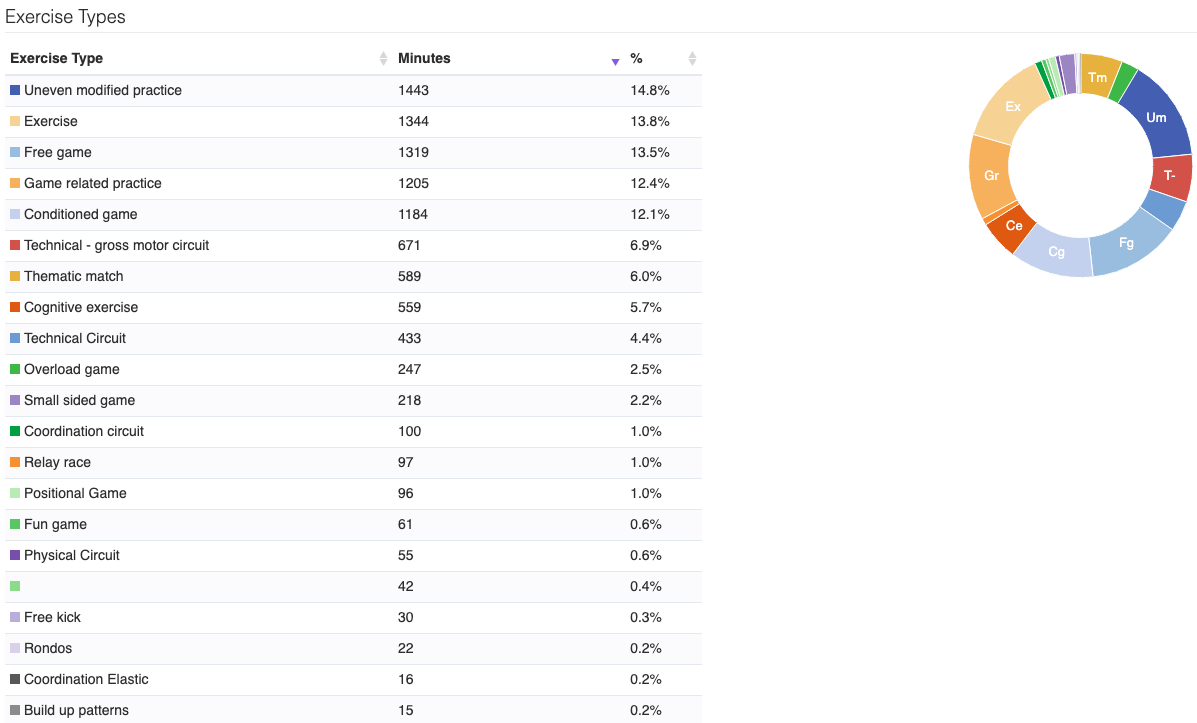
The drills chosen for each session are designed for good numerical adaptability based on squad size, allowing collective work to be paired with simultaneous small-group drills.
From the U13 category through the First Team, the post-training activity is called Third Half/ Cool Down: in the final 10 minutes, players can do dry-land activities, active recovery exercises, or specific physical work, either individually or in small groups, once a week at the end of the first or second session (this phase is intensified only during the summer preparation period).
Season Plan for U13-U12
In the training format designed for the Grassroots Activity categories, the pre-training phase, called Arrival Activity, was created by the YouCoach technical staff to primarily address the social-relational component. Especially in this phase, the proposed activities (from classic games to other challenges initiated freely by the coach or the children themselves, such as German ball circulation, target shooting games, technical circuits, etc.) are used not so much to improve individual and team skills, but as a moment of fun, cooperation, and self-management practice.
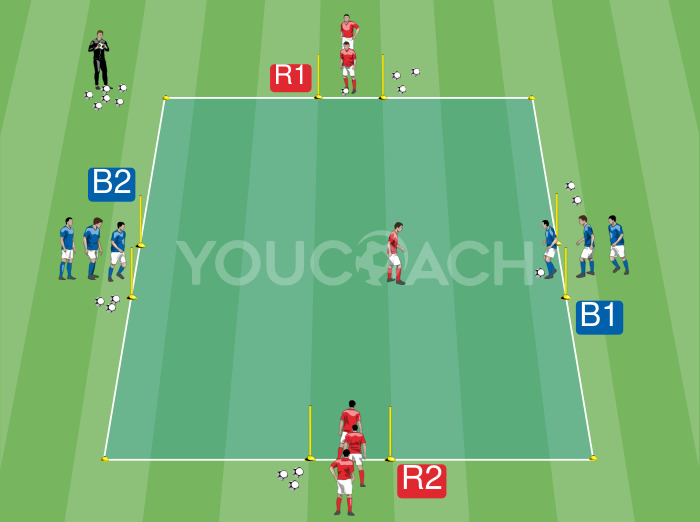
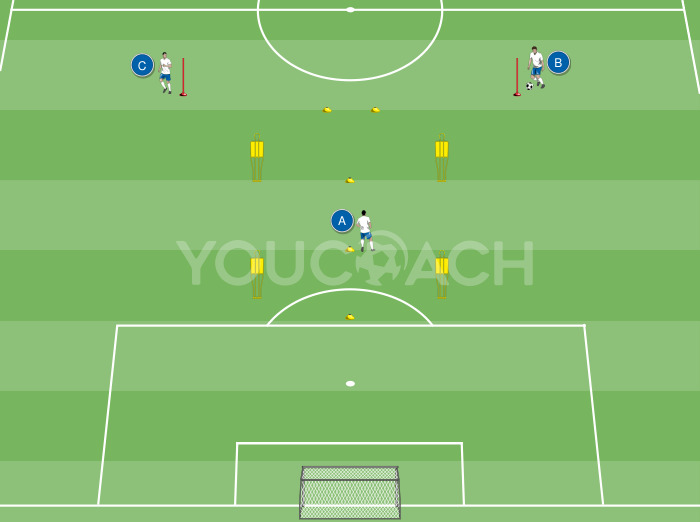
In the core block of the session, the time dedicated to the possession phase clearly stands out (roughly double that of the non-possession phase), developed along four main lines:
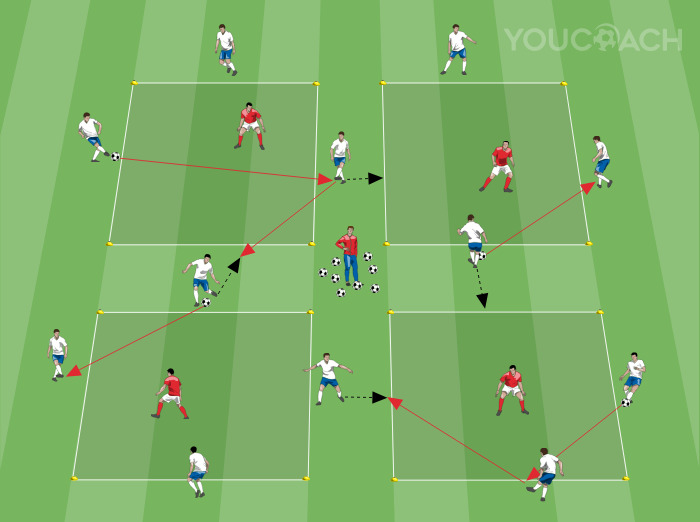
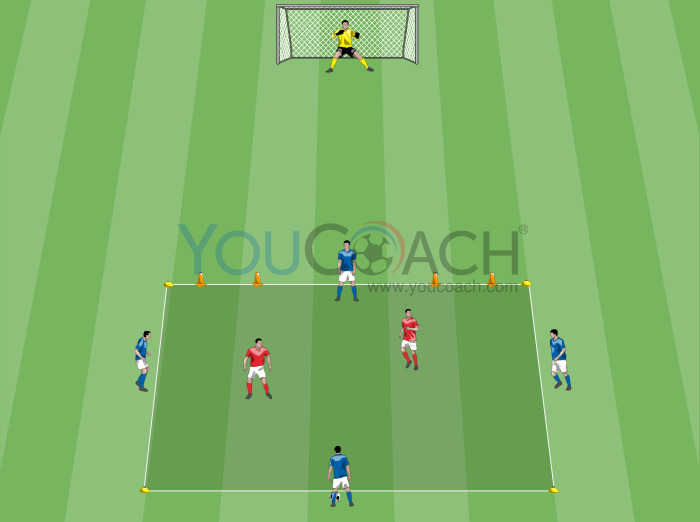
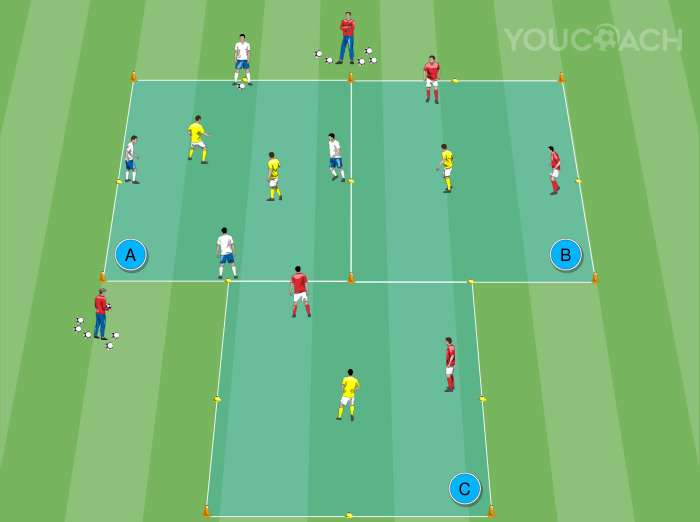
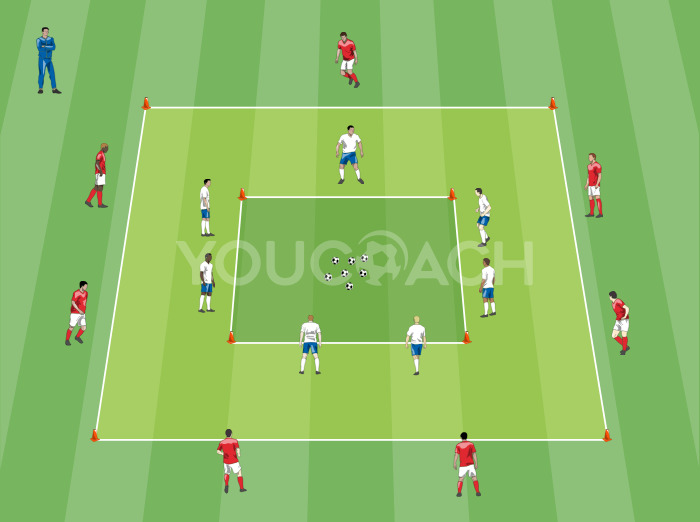
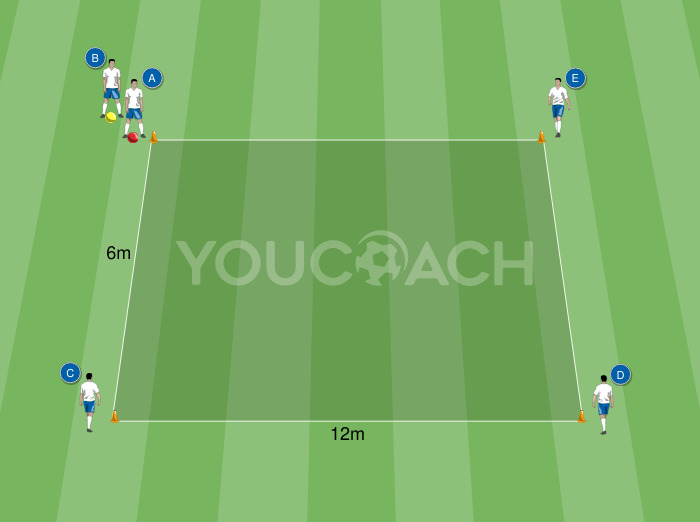
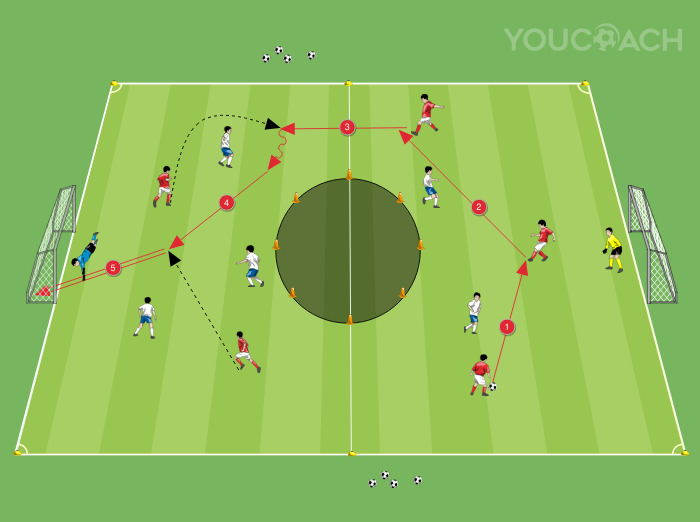
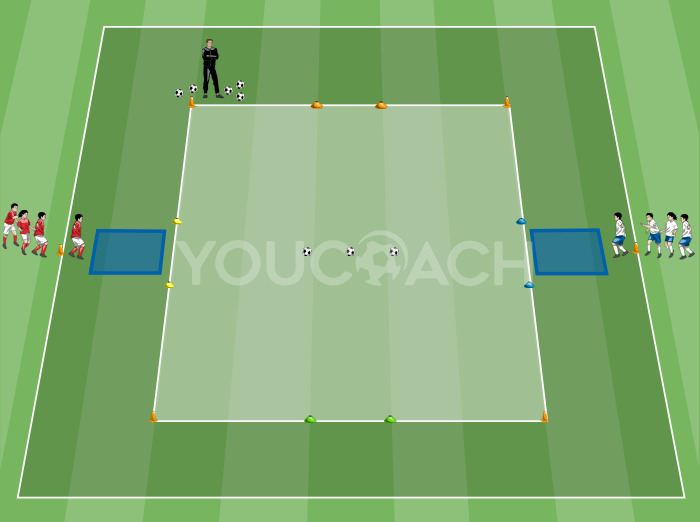
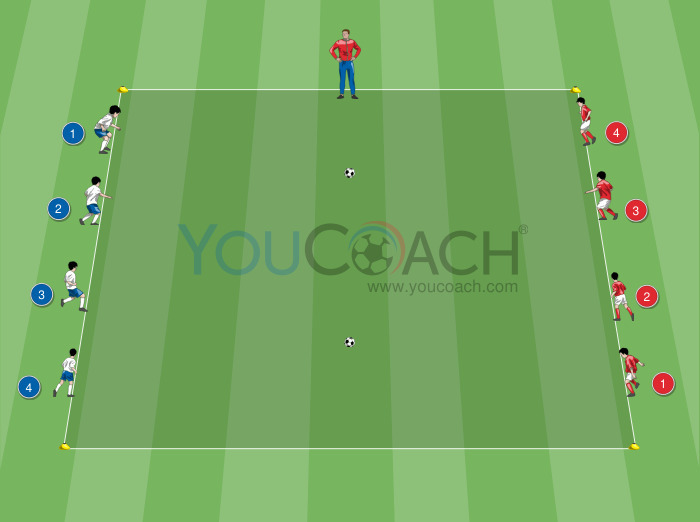
- Orientation, to help players find their bearings in space and read it effectively. The tools mainly used for this purpose were small-sided games, thematic games, rondos, conditioned games, and possession games;
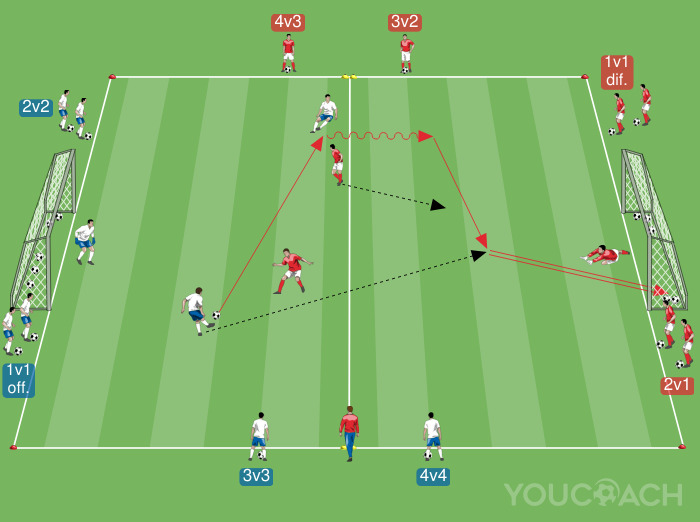
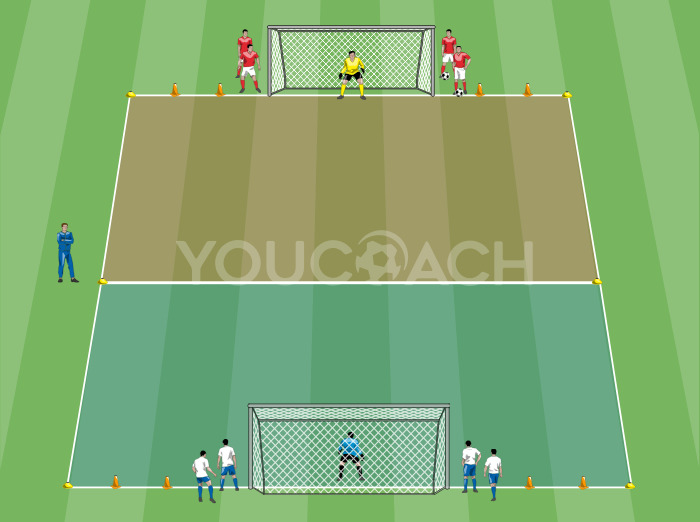
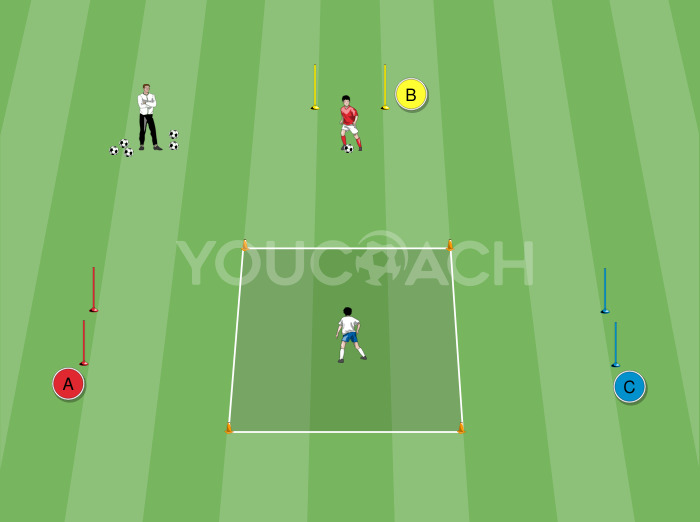
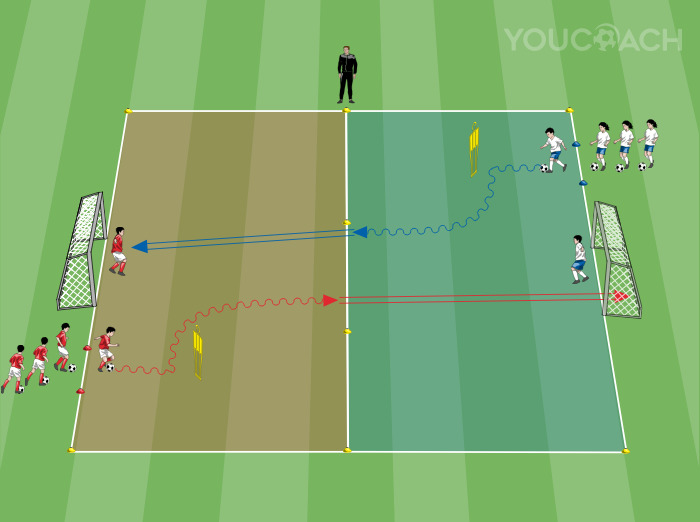
- Duels, both in numerical superiority (1v1, 2v2, etc.) and numerical inferiority, to get players used to managing superiority, controlling and protecting the ball, controlling the ball under pressure, and recognizing the right timing and distance for challenges. Emphasis was also placed on the distinctive qualities of duels, such as unpredictability, creativity, the ability to beat an opponent, and creating numerical superiority. In all these activities, play itself was used as the primary training tool, over analytical drills and loosely contextualized situations;
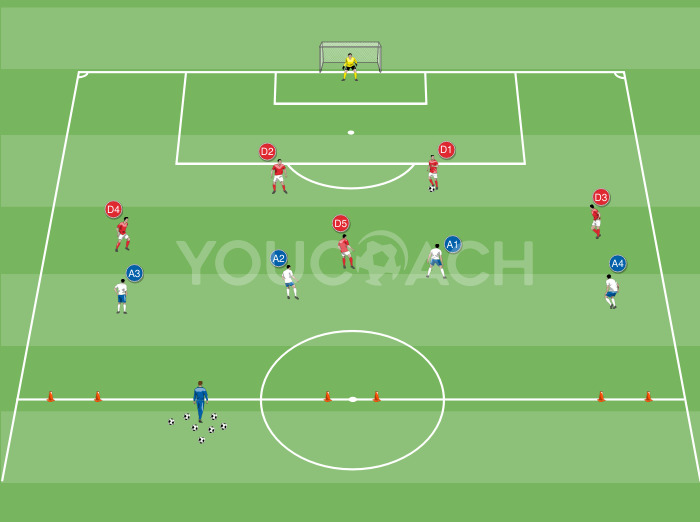
- Depth, understood as the ability to gain depth, get open beyond the opponent, get open diagonally (both in width and depth) to move play forward and get closer to the opponent's goal. This aspect was mainly developed through situational games;
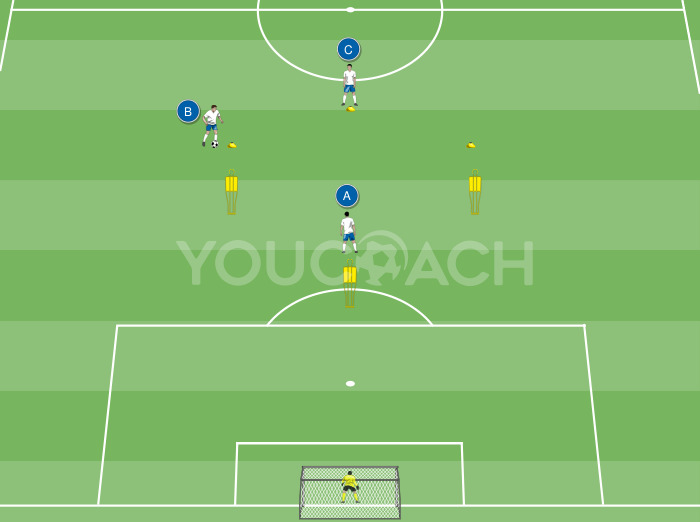
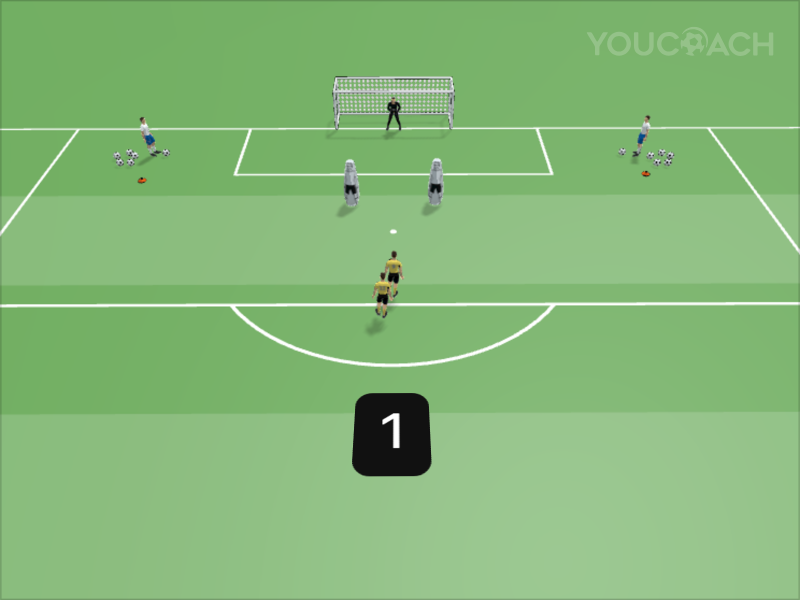
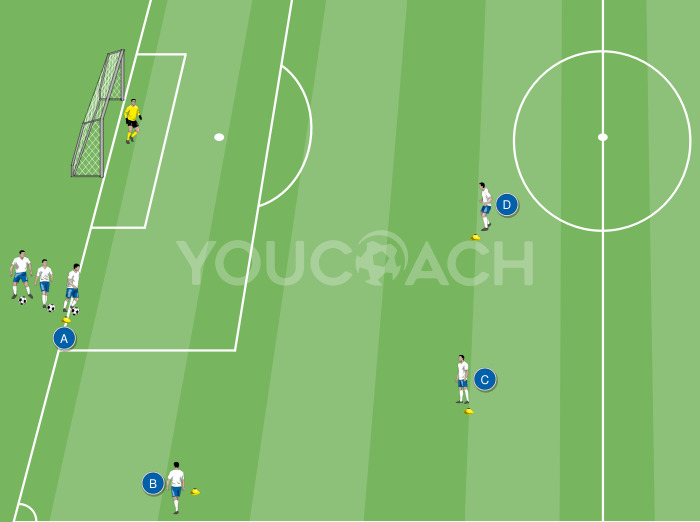
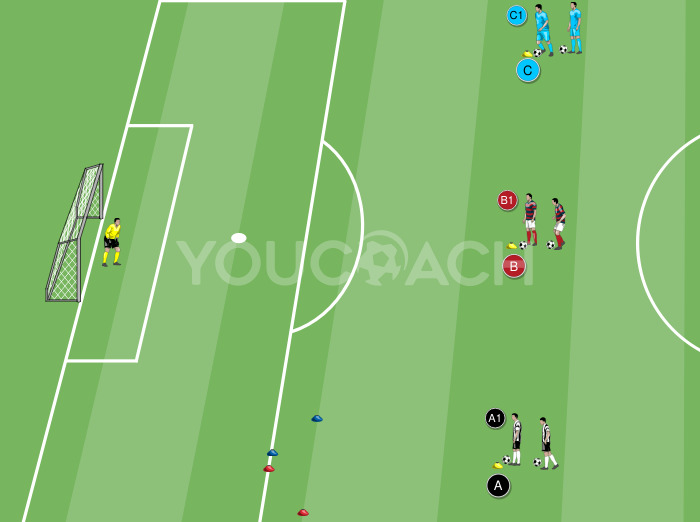
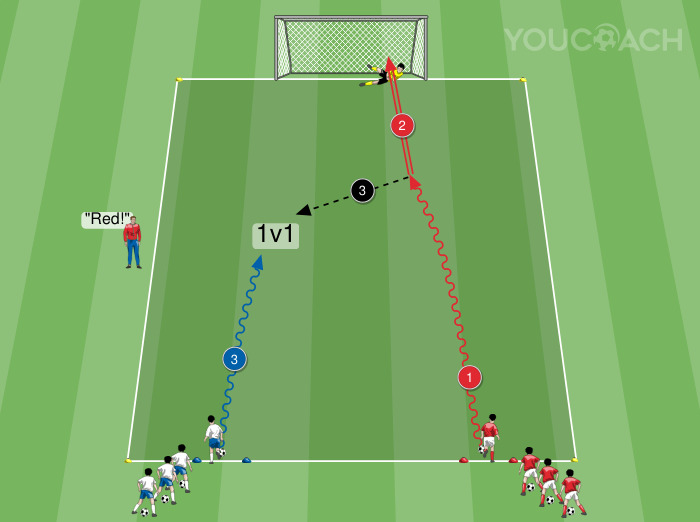
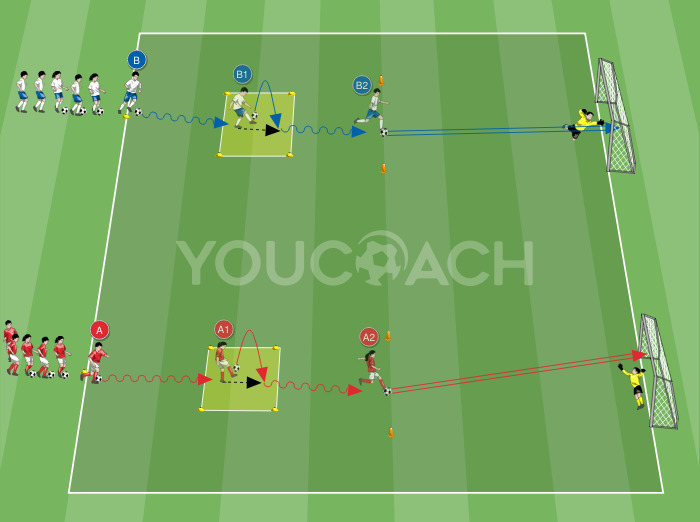
- Finishing, developed through duels, technical shooting circuits, specific individual movements, and game situations for attacking the goal and finishing from different angles.
The variety of drills used was a deliberate choice to offer different opportunities to work on the same objectives, but with different tools.
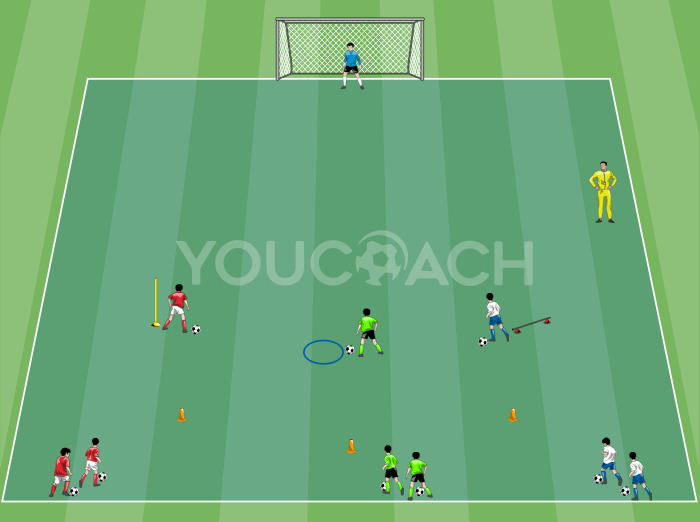
Regarding defensive skills, the guiding concept behind the choice of drills was positioning and goal protection: through game situations, duels in equal and inferior numbers, and possession games, the aim was to work on both individual pressure and small-group collective pressing, focusing on teaching correct positioning relative to the opponent, the ball, and the goal, how to cut passing lanes, and how to manage the distance in a duel. Also included were drills to get young players used to properly managing the transition phase and counter-pressing; rather than analytical drills, the most suitable tools were used, such as mini-possession games, small-sided games, and conditioned games that include a transition phase.
A distinctive phase in the program for this age group is set pieces, aimed not so much at reinforcing tactical understanding but rather at refining technique. That's why it was decided to include and develop it through games, challenges, and technical drills (such as penalty or free-kick competitions).
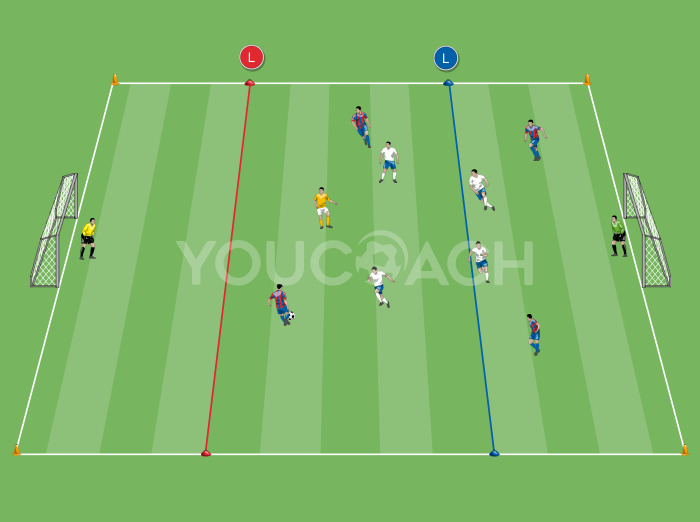
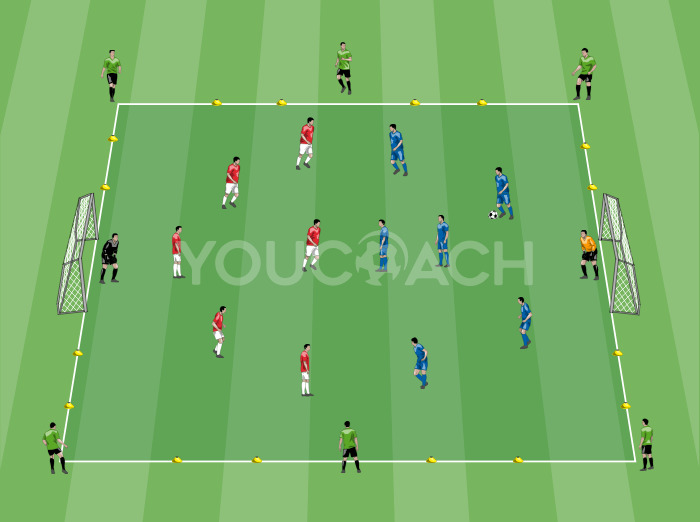
The final phase of the session was dedicated to the game: thematic games were chosen to introduce concepts related to the offensive and defensive situational phases described above, without making them too restrictive. More training time, however, was dedicated to free play, the go-to tool for wrapping up the session with enthusiasm and enjoyment.
A notable common thread in the choice of activities proposed for the grassroots categories is the emphasis on cognitive skills and problem solving through the wide variety of tools used.
The final Cool Down phase, offered once a week at the end of the session, includes coordination or technical work, used as a tool to refine technical/motor skills, done individually or in small groups.
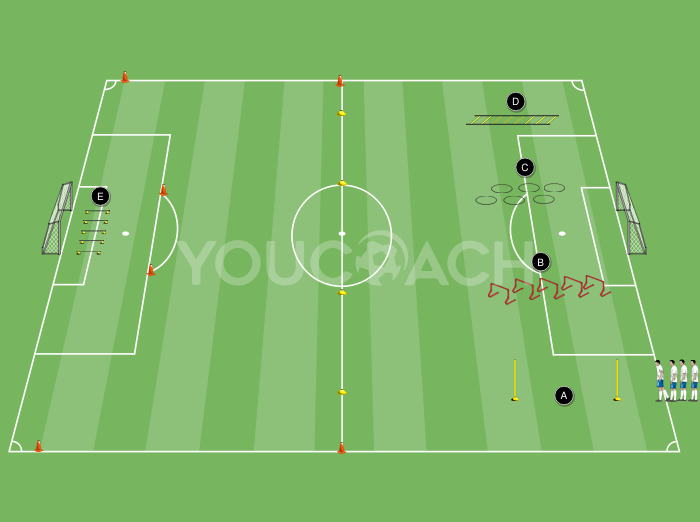
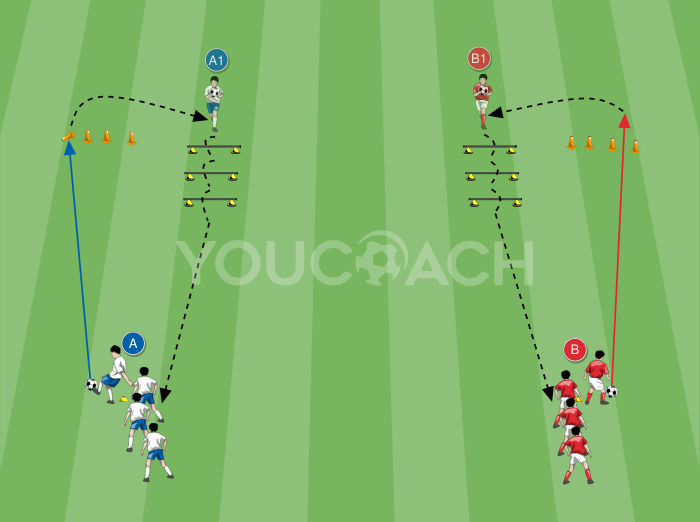
As for the performance component, the annual goals were chosen based on what this age group requires: the need to work on fundamental movement patterns, coordination skills, speed and quickness (and its various forms, such as cognitive skills, movement ability, and reaction ability), always favoring the use of the ball and a playful-competitive approach. Specifically, coordination activities were used as an injury-prevention tool, helping improve movement quality and, as a result, reduce the risk of injuries caused by improper movement or poor coordination skills.
While the variety of motor stimuli provided through the drills is considered important, needed to keep activities engaging and stimulating, the practical drills are still repeated throughout the season with the intent of building repetition aimed at automating movements and, as a result, mastering the targeted skill. Their duration never exceeds 10-15 minutes, following the general principle of quality of work over quantity.
In conclusion, we believe that what's provided here can be an excellent guide for any coach working in youth academies.
Instructions: How to Use the Complete Season Plan Feature on YouCoach App
- Visit our website - www.youcoach.com;
- Log in with the username and password you used to complete your purchase;
- Click on YouCoach App to log in;
- Create a new season;
- Set the start and end dates for the season;
- From the App menu, click Settings - Import Season;
- click the Import button next to the Complete Season Plan you purchased;
- In just a few minutes, all your training sessions will be automatically added to your calendar.
- Make sure you've created a new season; otherwise, archive the previous one;
- Set the start and end dates of the season (make sure the first day is a Monday to prevent training sessions from being scheduled incorrectly);
- In the App menu, click Settings - Import Season;
- Click the Import button next to the complete season plan you purchased;
- In just a few minutes, all your training sessions will be automatically scheduled in your calendar.