








Eyes on me!
Use eye contact as a way to transmit significant messages at emotional, psychological and social levels
Organization
One may ingenuously think that the best way to look at our players is straight in their eyes.
Actually, eye contact has to be carefully and properly modulated depending on context and objectives.
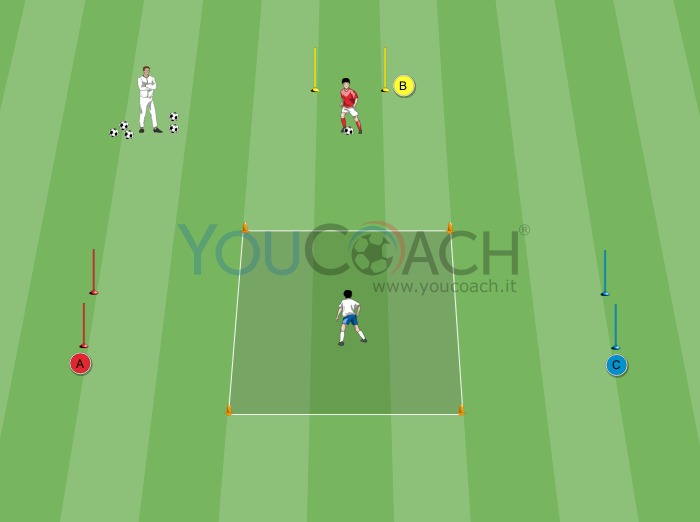
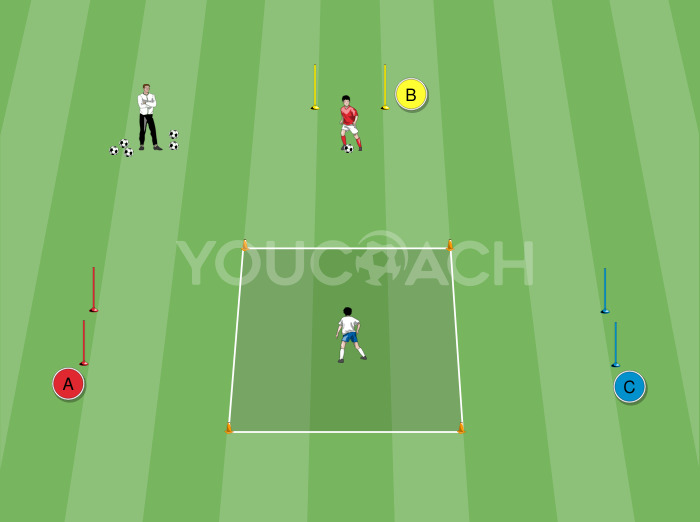
 When confronting the whole team, it is essential to share our gaze among all group members. The reasons are similar to those mentioned for equal distance. Equally distributed eye contact:
- makes everyone feel equally important;
- makes everyone feel equally involved;
- makes everyone feel a member of the team;
- improves team building;
- Allows the coach to read non verbal feedbacks (puffs, shaking heads, etc.);
- Allows the coach to draw greater attention from the players and verify their level of attention;
- Improves communication exchange;
- Doesn’t invade personal space.
I can deliberately decide to stare at a single player in the moment I wish to emphasize that the message is directed at them in particular. The more or less positive connotation of my eye contact will then result from the intensity of my gaze and proper facial gesture.
If our gaze overlooks a member of the team, we may transmit incorrect and negative messages.
A neglected player can:
- Feel he is not involved in what you are talking about (tactical choices, locker room problems, merits, etc.)
- Feel he is not appreciated;
- Feel he is not a member of the team;
- Be distracted easily;
- Distract others easily;
- Omit transmitting non verbal signals, thus limiting communication exchange.
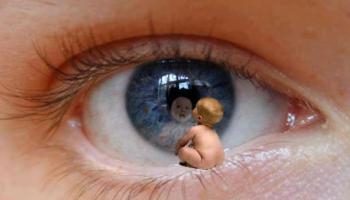
Sometimes personal insecurities make certain coaches look away or seek validation by staring at those players who support them totally, their favorites, or more fragile players who never react.
The bottom line? I think it is essential to be self aware, in order to be able to understand and properly control your players and situations through what they call the “windows to the soul”.